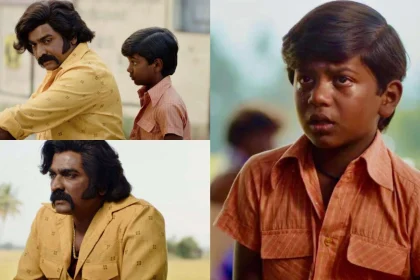
Director Karthik Subbaraj’s Dorothy (2026) has emerged as one of the most audacious, emotionally disruptive, and intensely discussed films in recent Indian cinema. At its absolute core, the film is a poignant study of love, identity, and raw human dignity. The deep, interconnected bond between Karthi (Rishikanth), Subbu (Sananth), and the title character Dorothy (Keerthy Suresh)—and how it struck a chord with the audience—reveals a masterclass in subverting traditional cinematic expectations, taking a story that could have been a conventional gangster drama and transforming it into something far more profound.

Growing up in early 1990s rural Tamil Nadu—a landscape heavy with toxic masculinity and violent caste borders—Karthi and Subbu share an unbreakable childhood bond. Subbaraj plays a brilliant narrative trick with their timelines: in childhood, Subbu is written as the aggressive, macho kid ready to fight, while Karthi is the soft, naive boy who gets bullied and cries. As young men, the roles completely flip—Karthi becomes the hardened local tough guy enmeshed in village violence, while Subbu internalizes a silent, deep emotional vulnerability. The arrival of Dorothy, a highly compassionate woman, alters the gravity of their world. Until her entry, their environment is bleak and hardened; Dorothy serves as a thematic lighthouse, injecting hope, joy, and emotional levity into a landscape that had none, forcing both men to re-examine who they are and confront the toxic boundaries they were born into.
The film’s defining narrative shift reveals that the connection Subbu feels with Dorothy isn’t just standard romantic attraction—it is a profound transgender kinship. Subbu is harbouring a suppressed trans woman identity, and following Dorothy’s presence and ultimate demise, Subbu gradually steps out of his forced masculine identity, transitioning into her attire to fully embrace his true self. This twist recontextualises everything that came before, transforming the film from a story about friendship and loss into a meditation on how society—and even Karthi himself—could only ever view their childhood bond through the lens of masculine friendship, until Subbu’s transformation allows that same core emotional connection to re-emerge with incredible, tragic romantic depth.
The audience response to Dorothy has been deeply polarized but heavily emotional. The sequence where Subbu slowly embraces his true identity, putting on Dorothy’s clothes to a sweeping, emotional background score by Maestro Ilaiyaraaja, has been universally praised as the most breathtaking and heartbreaking portion of the film. A specific scene where Subbu returns to the village, entirely broken, and collapses into the arms of Karthi’s mother under a railway bridge left theatre audiences choking up, perfectly capturing the film’s celebration of softness and empathy over relentless violence. The evolution from friendship to transgender romance moved viewers on platforms like Reddit’s movie threads, who noted that once Subbu transforms and begins living his truth, the lifelong connection between the two characters takes on a depth that no conventional narrative could have achieved. In a career defined by bold swings, Dorothy stands as Karthik Subbaraj’s most emotionally risky and rewarding work—a film that dares to ask what love looks like when every social script is stripped away.