Netflix’s Akka, a five-episode Hindi crime drama produced by YRF Entertainment and directed by debutant Dharmaraj Shetty, arrives with one of the year’s most intriguing premises: an 800-year-old matriarchal society in the fictional South Indian town of Pernuru where women control the gold-smuggling trade, country liquor tenders, and political power, systematically eliminating male competitors. Keerthy Suresh leads as Bhavani, the moralistic heir to the central house, while Radhika Apte plays Rudra, a ruthless outsider dispatched by a Bombay gangster to dismantle the coven’s empire.
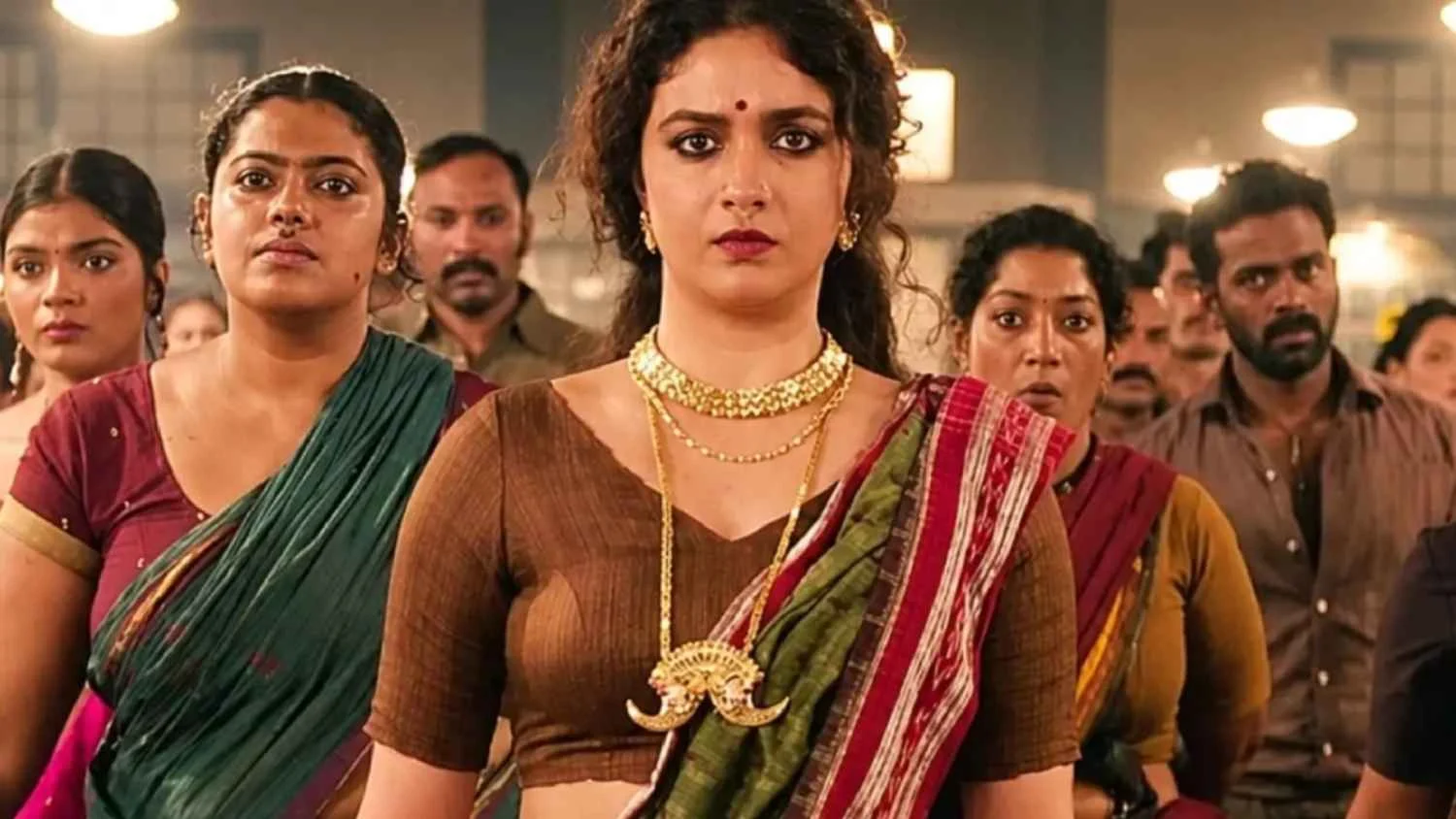
The series’ greatest strength lies in its world-building and visual identity. Pernuru feels distinct and lived-in, with saree-clad women wielding guns and machetes, elaborate gold jewellery serving as both adornment and armour, and a period setting that grounds the fantastical premise in tangible texture. Critics have widely praised the costume design and production values, with NDTV noting that the attention to detail in depicting South Indian traditions and 1980s surroundings is “remarkable”. At its heart, however, the show belongs to its two leads. Keerthy Suresh brings restrained intensity to Bhavani, commanding respect without constant aggression, while Radhika Apte lends Rudra a calculating edge that makes her a formidable counterpoint. The Hindu observed that seeing these women in traditional silks “soaking themselves in gritty action and raw violence” provides an “intoxicating high,” and News18 argued that the series effectively busts the “good woman” myth by showing that women in absolute power can be just as ruthless as any male gangster.
Yet beneath its progressive matriarchal premise, Akka frequently stumbles. The Hindu noted that the show dresses “progressive thought in a commercial gaze,” ultimately strengthening the very systems it claims to dismantle through pulpy, mass-market dialoguebaazi. WION was harsher, describing the dialogues as “hilariously cliché” and arguing that the story never taps into its own premise, becoming “ultimately a desi Game of Thrones”. The five-episode structure also works against the series—the first three episodes are exposition-heavy and struggle with massive world-building, while the climactic confrontations between Bhavani and Rudra, though anticipated, feel underwhelming compared to the build-up. The supporting cast, including Tanvi Azmi as the Machiavellian elder Muthakka, Poornima Indrajith as cousin Devaki, and Mahesh Manjrekar as the Bombay don, lends gravitas but often feels underutilised.
Ultimately, Akka is an ambitious swing that succeeds intermittently. It offers a refreshing spin on the gangster genre and two commanding performances that make it worth watching, but its uneven writing and reliance on conventional tropes prevent it from fully realising its potential. For viewers drawn to the premise of women ruling the underworld with iron fists and heavy jewellery, the series delivers enough intrigue to warrant a watch—just don’t expect the seamless subversion its marketing promises.